Nobody announces it.
That’s what makes it so easy to miss. Your father doesn’t say he’s lonely. He says he’s fine. He says he just hasn’t felt like going to the Thursday group lately. He says the neighbor who used to stop by has been busy — though she moved away eight months ago and he might not have fully registered that yet.
The television is on when you arrive. It’s still on when you leave. The kitchen table where the family used to sit together is where he eats alone now, usually something simple, usually quickly. The days have a sameness to them that he doesn’t mention and you can’t quite see from the outside.
This is what loneliness looks like in older adults. Not dramatic. Not loud. Just a life that has grown steadily quieter — one fewer connection, one less reason to get dressed in the morning, one more afternoon that passes without anyone knowing whether it was good or bad.
It is also, quietly, a health crisis. And it is one that non-medical home care services are built to address in ways that most families, however loving, cannot fully provide on their own.
The Health Consequences Families Don’t Expect
Most people understand loneliness as an emotional experience. What they don’t expect is how deep it goes physically.
Chronic isolation — the kind that settles in over months and years — puts the body under sustained stress. It raises cortisol. It drives inflammation. It suppresses the immune system in measurable, documented ways. Over time, isolated older adults develop cardiovascular disease at higher rates. They experience cognitive decline faster. They are significantly more likely to develop dementia than their socially connected peers.
Researchers have compared the health effects of chronic loneliness to smoking 15 cigarettes a day.
That comparison tends to land differently than a percentage in a study. Because most families would not leave a parent alone with a pack of cigarettes every day. But they leave them alone with silence — not out of neglect, but because life is demanding and distance is real and the parent says they’re fine.
The point is not guilt. The point is that senior loneliness is not a soft concern to be addressed when everything else is handled. It is a primary health risk. And addressing it requires more than phone calls and weekend visits, however sincerely those are offered.
Why Family Visits Aren’t Enough — and Why That’s Not a Failure
When families realize a parent is isolated, the instinct is to do more. Call every day. Coordinate siblings. Visit more often. Arrange meals and errands more carefully.
These things matter. But they have limits — structural ones that have nothing to do with how much the family cares.
A visit from an adult child carries weight. There’s the worry underneath it, the assessment happening even when it’s invisible, the feeling on both sides that time is limited and important. That dynamic is real and it’s meaningful. But it is different from presence — and presence is what isolated seniors need most.
Presence is something else entirely. It’s what develops when the same person shows up on Tuesday and comes back on Thursday, and then does it again the following week. When they learn how your father takes his coffee, and that he likes to talk about the years he spent farming, and that he doesn’t like to be rushed in the morning. When there is, over time, a relationship — not a check-in, not a task, but an actual relationship with its own rhythm and inside references and small continuities.
That is what non-medical home care services make possible in a way that family visits, even frequent ones, generally cannot. Not because the family doesn’t love the person. Because love and consistent daily presence are not the same thing, and older adults who are isolated need both.
What Companion Care Actually Does
Companion care is one of the foundational elements of non-medical home care services, and it is consistently underestimated by families who associate “real” caregiving with medical or physical tasks.
The underestimation is worth correcting — because the health effects of social engagement are as well-documented as most clinical interventions.
It restores daily structure. Isolation disrupts routine. Meals get skipped or simplified. Sleep becomes irregular. Physical activity drops. A caregiver who arrives consistently creates a scaffold for the day — a meal prepared, a walk taken, a reason to get dressed — that restores the rhythm that keeps people well.
It keeps the mind engaged. Conversation is cognitive work. Tracking what someone says, forming a response, following a story, remembering what was discussed last week — all of it exercises the brain in ways that matter. Older adults who have regular, meaningful conversation show slower rates of cognitive decline than those who don’t. The mechanism is not mysterious: consistent mental engagement sustains function, and function lost to isolation is often much harder to recover than function lost to illness.
It provides a witness. One of the loneliest aspects of aging alone is that nothing is noticed. No one sees that today was harder than yesterday. No one catches the slight change in gait, the meal left uneaten, the increased confusion in the afternoon. A caregiver who comes regularly is someone who notices — and who brings those observations back to the family before small changes become larger ones.
It reconnects people to life outside the home. For seniors who have stopped driving, the world shrinks fast. Appointments become ordeals. Errands require asking for help, which many older adults are reluctant to do. Transportation — one of the practical services within non-medical home care — is also a form of social medicine. Getting out of the house, interacting with the world, having somewhere to be — these things matter to wellbeing in ways that are underestimated until they’re gone.
What Changes When Someone Shows Up Consistently
Families who have gone through this often describe a specific shift — one that’s hard to predict but easy to recognize once it happens.
After a few months of regular caregiver visits, something loosens. The parent is more talkative. More curious. They mention the caregiver by name. They look forward to Tuesdays. There’s something in the week to anticipate, and that small thing turns out not to be small at all.
It is easy to attribute this to the practical help — the meals, the rides, the tidying. But what families are actually describing is what happens when someone is no longer invisible inside their own day. When there is another person in the world who knows their routine, notices their moods, and comes back.
For seniors who have been quietly lonely for a long time, that is a profound change. And it doesn’t require a medical intervention. It requires a relationship — consistent, unhurried, and built on showing up. That is precisely what non-medical home care services, at their best, are designed to make reliable.
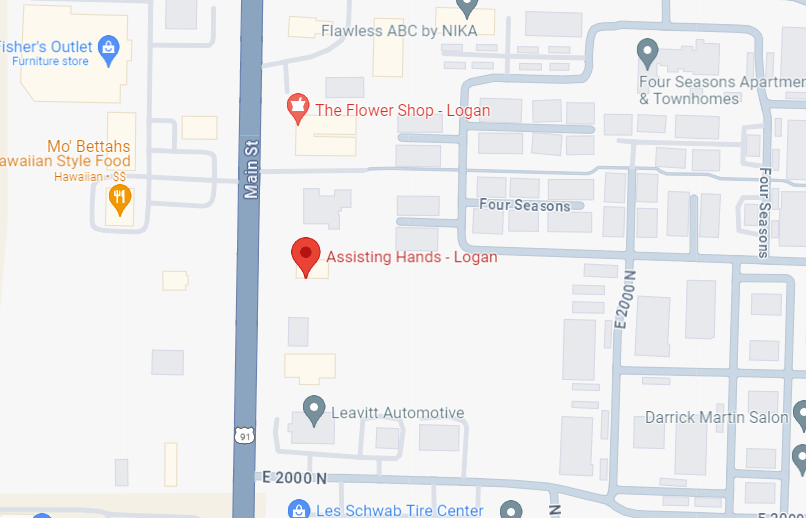
For families navigating this for a parent in Logan, Assisting Hands Home Care approaches caregiver matching this way. The goal is not just coverage. It is fit — a caregiver your parents will actually want to see again. Because that is what makes everything else possible.
Call (435) 216-3216, visit 434 North 20 West, Smithfield, UT 84335, or reach out online to schedule a free in-home assessment.
Frequently Asked Questions
What is companion care and how does it address senior loneliness?
Companion care is a core component of non-medical home care services that focuses on social engagement, consistent presence, and daily support rather than medical tasks. It includes conversation, shared activities, meal preparation, transportation, and light household help. Research consistently links regular companion care to reduced isolation, improved cognitive function, and better overall wellbeing in older adults.
How does loneliness affect physical health in seniors?
Chronic social isolation in older adults is associated with accelerated cognitive decline, higher rates of cardiovascular disease, increased rates of dementia, and significantly elevated mortality risk. The physiological mechanism involves sustained activation of the body’s stress response — elevated cortisol, increased inflammation, and suppressed immune function — that compounds over time.
Can non-medical home care services slow cognitive decline in isolated seniors?
Social engagement is one of the most consistently identified protective factors against cognitive decline in aging. Regular conversation, mental stimulation, and consistent human interaction — all provided through companion care within non-medical home care services — are associated with slower rates of cognitive decline and reduced dementia risk.
How often should a caregiver visit to make a meaningful difference?
Consistency matters more than total hours. Even two to three visits per week — providing several hours of reliable social contact — produces measurable improvements in mood, cognitive engagement, and self-reported wellbeing. The relationship that develops over time is what makes companion care effective, which is why caregiver consistency matters as much as visit frequency.
How is a caregiver matched to a senior for companion care?
A reputable non-medical home care agency matches caregivers based on more than care requirements. Personality, communication style, shared interests, and pace of life are all considered. A caregiver who is genuinely compatible with your parent’s temperament is one they will look forward to seeing — and that anticipation is part of what makes the relationship therapeutically effective.