
Families looking for dementia care in Montpelier, Idaho can build support from several sources: hospital-based home health, an assisted living community, free community support, and non-medical in-home care. Each does a different job. This guide shows what each one covers and how to match it to your parent’s stage.
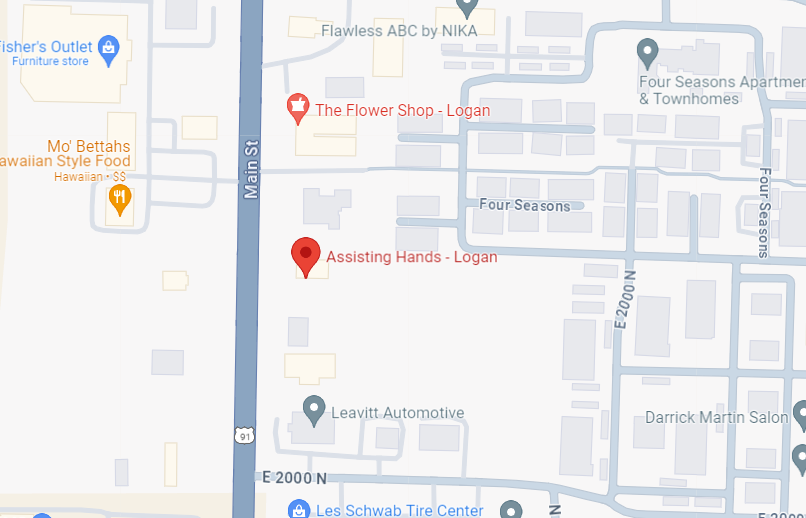
The choice feels harder in a small community. Specialists and memory care communities may be far away, and families often learn about options only after a crisis. Knowing the differences early makes each decision calmer. Assisting Hands® Home Care operates from its main office in Logan, Utah, and serves the Montpelier area.
What Dementia Care Options Exist Nearby?
Six sources of help exist, and most families use more than one.
| Option | What it provides | Best fit | Main limit |
| Hospital-based home health | Skilled nursing, therapy, and medical social services ordered by a physician | Recovery or a medical need | Short-term and clinical, not daily companionship |
| Non-medical in-home care | Companionship, personal care, meals, errands, and overnight support | Daily help in a familiar home | No clinical procedures |
| Assisted living | Housing, meals, and supervision in a community | Safety needs a person cannot meet alone | Limited capacity, so ask about dementia policies |
| Skilled nursing | Round-the-clock nursing care | High medical needs | Not built for light daily support |
| Memory care community | Dementia-focused housing and programming | Advanced needs or serious wandering risk | Availability nearby varies, so confirm first |
| Free community support | Support groups, a 24/7 helpline, and caregiver counseling | Every stage | Does not provide hands-on care |
Which of these exist nearby, and what each currently offers, can change. Confirm details with each provider before deciding.
How Does Non-Medical In-Home Care Fit With Dementia?
Non-medical in-home care covers daily routines and companionship so a person with dementia can stay in a familiar home.
What Daily Support Includes
- Companionship and steady daily routines
- Meal preparation and light housekeeping
- Personal care such as bathing and grooming
- Errands and grocery shopping
- Overnight or 24-hour coverage when needs grow
- Respite care so family caregivers can rest
A steady caregiver also notices small changes and can help the family describe them at medical visits.
What It Does Not Include
Non-medical caregivers do not diagnose, prescribe, or perform clinical procedures. Those decisions stay with physicians and nurses. Hospital-based home health covers skilled needs, and the two can work side by side.
How Care Is Arranged
Care for families in and around Montpelier, Idaho is arranged through the Logan office. Caregivers are trained to support people living with Alzheimer’s disease and other dementias, and are licensed, bonded, insured, CPR-certified, and background-checked.
Placement can generally happen within 48 hours of the first call. A free in-home assessment starts the process, and availability in each community is confirmed on that call.
A well-qualified caregiver is assigned and gets to know the person over time. Care plans are built to change as needs change, and a new caregiver can be assigned if a match is not working. More detail is on the dementia care services page.
Why Do Families Need More Than One Kind of Support?
Dementia care often lasts for years, and no single provider covers every need.
The strain on family caregivers is well documented. A 2026 national report on Alzheimer’s disease estimates that about 74,000 Idaho family caregivers provided roughly 118 million hours of unpaid dementia care.
Free Help for Family Caregivers
- Free caregiver support groups, offered by phone, video, or in person
- A 24/7 dementia helpline for questions at any hour
- Regional aging services that provide caregiver counseling and respite referrals
These services do not replace hands-on help, but they reduce isolation and give families a place to ask questions.
When Is Home Still the Right Place for Dementia Care?
Home often works when daily needs can be met safely with the right support.
Signs Home Is Working
- Meals, bathing, and medications are handled reliably
- The person feels calm in familiar surroundings
- Family caregivers are rested and able to keep helping
Signs It May Be Time for More Help
- Wandering or getting lost despite safeguards
- Missed meals, falls, or unsafe stove use
- Nights that are unsafe or exhausting for everyone
- A family caregiver who is ill or worn down
Any of these signs is a reason to talk with the primary care clinician. There is no single right answer, and needs can shift after an illness or hospital stay. For families seeking dementia care in Montpelier, Idaho, options range from a few caregiver hours a week to overnight care, assisted living, or a memory care community.
How Do You Choose the Right Level of Support?
Start with the least intensive support that keeps the person safe, then adjust.
- Ask the primary care clinician about the current stage and safety needs.
- List the daily tasks that are becoming difficult.
- Match each task to an option in the table above.
- Call providers and ask about availability, training, and backup coverage.
- Review the plan every few months and after any hospital stay.
Keep notes on sleep, meals, and mood so each provider sees the same picture.
Start With the Support Your Family Needs Most
Dementia care in Montpelier, Idaho works best when local services, free community support, and steady daily help at home work together. Starting small is fine. A caregiver a few hours a week can ease pressure and give clinicians a clearer picture. Call (435) 216-3216 to talk through options.
Dementia Care in Montpelier, Idaho FAQs
Where can families find dementia care in Montpelier, Idaho? Options can include hospital-based home health, assisted living, skilled nursing, free community support, and non-medical in-home care. Assisting Hands provides non-medical in-home care and serves the area from its main office in Logan, Utah. Many families combine two or three of these.
Does Assisting Hands have an office in Montpelier? No. Assisting Hands® Home Care operates from its main office in Logan, Utah, and serves Montpelier, Idaho, and surrounding communities from there. Caregivers provide care in the client’s home or can visit a care facility.
What is the difference between home health and non-medical care for dementia? Home health provides skilled nursing and therapy ordered by a physician, usually for a limited period. Non-medical care helps with daily living, such as bathing, meals, and companionship, and can continue for as long as needed. Many families use both.
Is dedicated memory care available nearby? Dedicated memory care communities may be located some distance away, sometimes in another state. Ask local providers whether dementia-specific services are available, and confirm current details before deciding.
How do families pay for dementia care at home? Standard federal health coverage for older adults generally does not cover custodial help at home, such as bathing or meals. Families pay privately or use long-term care insurance when a policy covers it. A local aging services office can explain state programs.
Can an in-home caregiver help someone already in assisted living? Yes. Assisting Hands® can provide one-on-one care in facilities such as assisted living communities, nursing homes, rehabilitation centers, and hospitals, alongside facility staff.
Can veterans use federal benefits to pay for dementia care at home? Eligible veterans and surviving spouses may qualify for a federal pension supplement that helps pay for in-home care. Eligibility depends on service history, income, and care needs. Assisting Hands® can explain the application steps.