
When families start searching for help for aging parents at home, one of the first things that trips them up is the terminology.
Home care. Home health care. In-home care. Home health aide. Personal care assistant. The terms get used interchangeably in casual conversation, on agency websites, and even by well-meaning doctors — and the confusion has real consequences. Families spend weeks looking at the wrong type of provider. They get told their parent doesn’t qualify for coverage. They assume their parent needs medical care when what they actually need is daily support, or vice versa.
This blog post explains exactly what each type of care involves, who it’s designed for, and how to figure out which one your parent actually needs — before you spend time talking to the wrong providers.
Home Care and Home Health Care Are Not the Same Thing
This is the foundational point, and it’s worth stating clearly before anything else.
Home health care is medical. It is ordered by a physician, typically following a hospitalization, surgery, or significant change in a patient’s condition. It is delivered by licensed clinical professionals — registered nurses, physical therapists, occupational therapists, speech therapists — who come to the home to perform specific, medically supervised tasks. Wound care, IV therapy, post-surgical monitoring, skilled nursing assessments, and physical rehabilitation — these are home health care services. Home health care is usually short-term and episode-specific. It ends when the clinical goals are met or when Medicare or insurance coverage runs out. It is not a long-term daily care solution.
Home care — also called non-medical home care or personal care — is something entirely different. It is not ordered by a physician. It does not involve clinical procedures. It is delivered by trained caregivers who help with the everyday tasks that have become difficult: bathing,
dressing, grooming, meal preparation, medication reminders, light housekeeping, and transportation. It also includes companion care — regular visits that provide social connection and reduce isolation.
Home care is typically ongoing rather than episode-specific. It provides the consistent, daily support that allows a parent to remain safely at home for months or years rather than weeks.
Why the Confusion Happens — and Why It Matters
Most families looking for help for aging parents at home don’t arrive at this topic with a clear mental map of the care landscape. They arrive because something changed — a parent fell, a sibling called with a concern, a visit revealed a home that wasn’t being maintained — and they started searching for options without knowing exactly what they were searching for.
The confusion is compounded by a few common misunderstandings:
- Medicare covers home health care but not home care. This is one of the most significant sources of confusion and disappointment in the entire senior care system. Families assume that Medicare will cover the help their parent needs, only to discover that it covers skilled nursing visits and therapy sessions — not the daily personal care and companionship that their parent actually needs most. Medicare does not cover non-medical home care, with limited exceptions.
- Hospitals often discharge patients with home health care referrals but no guidance on home care. A parent who comes home from surgery may receive a nurse’s visit twice a week and a physical therapy session — but no help with bathing, meals, or housekeeping between those visits. Families are left filling those gaps themselves, often without realizing that professional home care exists to do exactly that.
- The titles overlap. A “home health aide” sounds like home health care, but in many contexts refers to a personal care worker who provides non-medical support. A “home care agency” may or may not provide skilled nursing depending on its licensure. Reading carefully — and asking directly — is essential.
What Most Aging Parents Actually Need
The majority of families searching for help for aging parents discover, once the terminology is clarified, that what their parent needs is non-medical home care, not home health care.
Here is the profile of a parent who benefits most from non-medical home care:
- They are managing age-related challenges that make daily tasks harder — mobility limitations, fatigue, mild cognitive changes, and chronic conditions that affect energy and stamina.
- They are at risk for falls, malnutrition, or medication errors, not because of an acute medical situation, but because daily management has become too demanding to handle alone.
- They are isolated, lonely, or withdrawing from activities they used to enjoy
- They are recently discharged from a hospital or rehabilitation facility and have clinical services covered, but need consistent daily support between those visits.s
- A family caregiver — an adult child, a spouse — has been absorbing the caregiving load and is approaching or past the point of sustainable capacity.
For families in the Logan area and across Northern Utah, non-medical home care provides this kind of consistent, personalized daily support. Caregivers are matched to the individual — to their routine, their personality, their preferences — and show up on a schedule that works for the family. The care adjusts as the parents’ needs change over time.
When Home Health Care Is the Right Answer
Home health care is appropriate when a parent has an acute medical need that requires clinical attention at home. Specific situations include:
- Recovering from surgery with wound care or post-operative monitoring needs
- Managing a new diagnosis or significant change in a chronic condition that requires skilled nursing assessment
- Receiving IV medications or other clinical treatments that can be safely administered at home
- Needing physical, occupational, or speech therapy following a hospitalization or neurological event
In these situations, a physician referral triggers a home health care plan, and Medicare or other insurance typically covers the clinical services for a defined period. When that period ends — and when the clinical goals are met — home health care stops.
What often doesn’t stop is the parents’ need for daily non-medical support. That’s where home care picks up where home health care leaves off, and why the two types of care frequently work in sequence rather than in competition.
How to Figure Out What Your Parent Needs
The clearest path through the confusion is a direct assessment conversation — not a phone call with an insurance company, but a conversation with someone who can look at your parent’s actual daily life and tell you what kind of support would make a meaningful difference.
Families looking for help for aging parents at home in and around Logan, Utah, can schedule a free in-home assessment with Assisting Hands® Home Care. A Care Coordinator visits the home, meets your parent, listens to the family, and gives an honest picture of what support is actually needed — non-medical care, a referral to a clinical provider, or some combination of both. There’s no obligation and no predetermined answer. Most families say that conversation alone gave them more clarity than weeks of searching on their own.
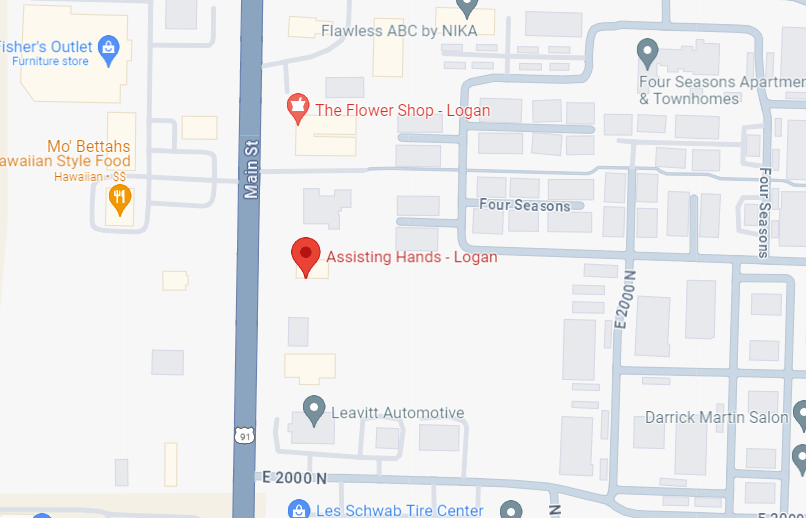
Call (435) 216-3216, visit us at 434 North 20 West, Smithfield, UT 84335, or reach out online to schedule that conversation.
Frequently Asked Questions
Q: What is the difference between home care and home health care?
A: Home health care is medically supervised care provided by licensed nurses or therapists under a physician’s order. Home care offers non-medical daily support, such as personal care, meal preparation, medication reminders, and companionship, through trained caregivers. They serve different needs and are provided by different types of agencies.
Q: Does Medicare cover home care for aging parents?
A: Medicare does not cover non-medical home care. It only covers physician-ordered home health care that meets specific medical criteria and is limited to skilled services. It does not pay for ongoing daily in-home support.
Q: Can my parent receive both home health care and home care at the same time?
A: Yes. A parent recovering from surgery may receive skilled nursing and physical therapy through home health care while also getting personal care, meal preparation, and companionship through a home care agency. These services meet different needs and can be provided at the same time.
Q: How do I know if my parent needs home care or home health care?
A: If your parents’ needs involve daily tasks like bathing, dressing, meals, companionship, or housekeeping, they need non-medical home care. If they require skilled medical services such as wound care, post-surgical monitoring, IV therapy, or rehabilitation, they need home health care. In many cases, both services work together, with home health care being temporary and home care providing long-term support.
Q: What does a non-medical home caregiver actually do?
A: A non-medical home caregiver helps with personal care, dressing, mobility, meal preparation, medication reminders, light housekeeping, laundry, transportation, and companionship. For seniors with dementia or Alzheimer’s disease, trained caregivers also provide structured routines and memory care support to reduce confusion and promote daily independence.