
For families caring for an aging parent, a spouse, or a loved one with a disability or chronic condition, finding the right home care agency is one of the most consequential decisions they will make. When you start searching for a trusted home care agency near me, the results can feel overwhelming. There are national franchises, small independent providers, online directories, private caregiver listings, and agencies with websites that all appear to be similar. The word “professional” appears everywhere. So does “compassionate.” And almost everyone claims to be reliable.
What most families don’t realize is that behind the similar-looking websites, there is a significant and consequential difference between agencies that are certified, licensed, and professionally credentialed — and those that are not.
That difference doesn’t just affect price or convenience. It affects the safety of the person receiving care, the legal exposure of the family arranging it, and the practical question of what happens when something goes wrong. Understanding it before you hire is far easier — and far less costly — than discovering it afterward.
What “Certified” Actually Means in Home Care
The term “certification” is used loosely in the home care industry, which creates confusion. Here is what the term actually encompasses when applied to a legitimate home care agency.
- State licensure is the foundational requirement. In most states, a non-medical home care agency must hold an active state license to legally operate and place caregivers in clients’ homes. Licensure requires the agency to meet minimum standards for caregiver screening, training, supervision, and record-keeping. It also subjects the agency to state oversight and the possibility of audit or sanction if standards are not met.
- Bonding protects the client against financial loss caused by a caregiver — theft, property damage, or dishonesty. A bonded agency has obtained a surety bond that covers these losses. An unbonded agency does not.
- Insurance protects both the client and the agency if a caregiver is injured on the job or if an incident occurs in the home. Without agency insurance, a family that hires a private caregiver may be exposed to workers’ compensation liability if the caregiver is injured while providing care in their home.
- CPR and first-aid certification ensure that every caregiver placed in a client’s home has documented, current training in emergency response. This is a minimum safety standard — not a differentiator — but it is one that uncertified agencies frequently skip.
- Background checks are the most discussed and least understood credential in home care. A genuine background check includes criminal history, sex offender registry verification, and reference screening. Some agencies conduct background checks through county databases only, which miss out-of-county or out-of-state records entirely. A thorough background check uses a national database and is repeated at defined intervals, not just at hire. This distinction matters because a person’s history in another county or state is just as relevant as their local record.
- Professional association membership, such as membership in the Home Care Association of America, signals that an agency has voluntarily committed to a code of ethics, professional development, and industry standards above the state minimum.
What an Uncertified Agency Looks Like in Practice
An uncertified or minimally credentialed agency is not always easy to identify from the outside. Some have professionally designed websites, positive-sounding names, and reasonable-seeming prices. The differences tend to surface in the operational details that families often forget to ask about.
An uncertified or loosely credentialed agency may:
- Place caregivers without conducting state-approved background checks
- Use caregivers who are classified as independent contractors rather than agency employees — shifting legal liability onto the family.
- Have no bond, meaning a family has no recourse if property is damaged or items go missing.
- Carry no liability insurance, leaving the family exposed if a caregiver is injured in the home
- Lack formal caregiver training requirements, meaning the person entering your parents’ home may have received little or no standardized preparation
- Have no state licensing, meaning no external oversight and no enforceable minimum standards.
- Provide no backup coverage when a scheduled caregiver is unavailable — leaving the family to manage the gap.
None of these omissions is always visible before something goes wrong. That’s exactly why understanding them before hiring is essential.
Why the Distinction Matters More Than Families Usually Think
Most families, when they start looking for a trusted home care agency near me, are focused on fit — the right caregiver, the right schedule, the right price. The credential question feels abstract compared to the immediate practical concerns. It is easy to assume that if an agency has a professional website and answers the phone promptly, the operational details are probably fine.
It stops feeling abstract when a caregiver doesn’t show up, when something goes missing from the home, when a caregiver is injured, and the family receives a workers’ compensation claim, or when a parent’s condition changes and the agency has no protocol for managing the situation.
A certified, licensed agency has operational infrastructure for all of these scenarios. It has backup caregiver coverage. It has documented protocols. It has insurance that covers what goes wrong, and a supervisory structure that catches problems before they become crises.
An uncertified or loosely operating agency often does not — and the family absorbs the consequences.
The Questions That Separate Trustworthy Agencies from the Rest
When evaluating a home care agency, the following questions will give you a clear picture of whether it is genuinely credentialed or operating below professional standards.
Are your caregivers employees of the agency or independent contractors? Agency employees are covered by the agency’s workers’ compensation and liability insurance. Independent contractors are not, and the family may bear legal responsibility for an on-the-job injury.
Is the agency licensed by the state? Ask for the license number. A legitimate agency can provide it immediately.
Are caregivers bonded and insured through the agency? Not just the agency itself — the coverage should extend specifically to caregiver activity in the client’s home.
What does your background check process cover? The answer should include national database screening, sex offender registry, reference checks, and periodic re-screening — not just a one-time county check.
What happens if my assigned caregiver can’t make a scheduled visit? A credentialed agency has an answer to this question and a process for executing it. An uncertified operation often doesn’t.
Are caregivers CPR and first-aid certified? Certification should be current and documented — not self-reported.
What professional associations or certifications does the agency hold? Membership in organizations like the Home Care Association of America, partnership with the Alzheimer’s Association, or VA-approved provider status are meaningful indicators of an agency that holds itself to standards beyond the minimum.
What a Genuinely Trustworthy Home Care Agency Looks Like
For families searching for a trusted home care agency near me, the checklist above is a useful filter. An agency that answers each question clearly, specifically, and without hesitation is demonstrating something that no amount of marketing language can replicate: operational accountability.
As an example of what a fully credentialed agency looks like in practice, Assisting Hands® Home Care in Logan holds the following: caregivers are licensed, bonded, and insured. Background checks cover national databases. Every caregiver is CPR-certified and screened for COVID-19 and TB. The agency is a VA-approved provider, a member of the Home Care Association of America, and a partner of the Alzheimer’s Association. When a caregiver cannot make a scheduled visit, backup coverage is provided — the family does not manage that gap alone. And care plans are built to flex as a loved one’s needs change over time, so families are never locked into an arrangement that no longer fits.
The difference between a certified agency and an uncertified one is not a technicality. For families navigating this decision, it is one of the most consequential distinctions in the entire hiring process — and one that is far easier to evaluate before hiring than after something goes wrong.
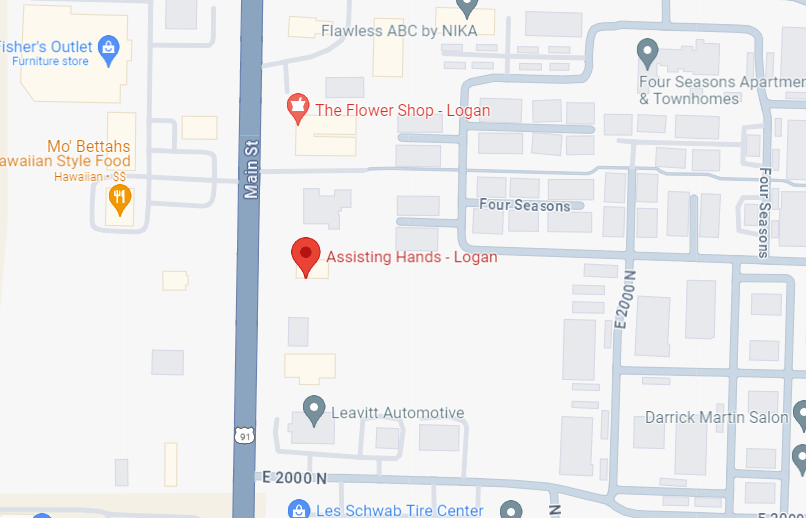
Call (435) 216-3216, visit 434 North 20 West, Smithfield, UT 84335, or reach out online to schedule a free in-home assessment. No obligation. No pressure. Just an honest conversation about what your family needs.
Frequently Asked Questions
Q: What is the difference between a licensed and an unlicensed home care agency?
A: A licensed home care agency holds an active state license authorizing it to place caregivers in clients’ homes and is subject to state oversight and minimum standards for screening, training, and supervision. An unlicensed agency operates without this authorization, meaning no external oversight, no enforced minimum standards, and no state-level accountability if something goes wrong.
Do I need to verify that a home care agency is bonded and insured?
A: Yes. Bonding protects against caregiver dishonesty or theft. Liability insurance protects against injury or property damage during care. Without both, the financial and legal exposure falls on the family. Always ask for documentation rather than taking a verbal assurance.
What should a home care background check include?
A: A thorough background check includes national criminal database screening, sex offender registry verification, reference checks, and identity verification. Checks limited to a single county or state miss records from other jurisdictions. Ask the agency specifically what their background check covers and how often it is repeated.
Are home care agency employees different from independent contractors?
A: Yes — significantly. Agency employees are covered by the agency’s workers’ compensation insurance. If an agency employee is injured in your home, the agency’s insurance covers it. If a private contractor is injured, the family may be liable. This distinction is one of the most consequential and least-asked questions in home care hiring.
How do I know if a home care agency is truly trustworthy?
A: Ask specific operational questions: state license number, bonding and insurance documentation, background check scope, caregiver training requirements, backup coverage protocols, and professional association memberships. A trustworthy agency answers each question specifically and provides documentation on request. Vague or general answers are a meaningful warning sign.