
Most families don’t ask this question when they should. They ask it when they’re already exhausted. By the time a family is searching for a professional caregiver for a parent with Parkinson’s, someone has usually been covering the gap for months — a spouse who has quietly taken over every morning routine, an adult child driving over before work to make sure medications happened on time, a sibling network doing informal shift coverage across three time zones. The caregiving didn’t start all at once. It grew, gradually, into something nobody formally agreed to manage and nobody knew how to stop.
Parkinson’s disease is progressive. That’s not a warning — it’s a planning framework. The question isn’t whether needs will increase. They will. The question is how to recognize the specific points at which family caregiving alone is no longer safe, sustainable, or fair to the person receiving it.
This guide is designed to answer that question honestly, at each stage of the disease, so families can make a decision before a crisis makes it for them.
What Makes Parkinson’s Caregiving Different
Parkinson’s is not a single condition with a predictable trajectory. It is a neurological disease that affects movement, cognition, swallowing, sleep, mood, and autonomic function differently in every person, at different rates, in different combinations.
That variability is one of the reasons families underestimate the transition point. They compare their parents to other people with Parkinson’s and conclude things aren’t that bad yet. Or they watch a good week follow a difficult one and decide the difficult week was an anomaly.
Experienced caregivers in Logan, Utah, consistently note that the most common mistake families make is calibrating to the good days rather than the average ones. Parkinson’s symptoms fluctuate throughout the day, often significantly. The way someone moves and communicates at 10 a.m. may look very different from how they function at 4 p.m. Planning care around the best presentation is how dangerous gaps get created.
Signs That Professional Help Is Needed — by Stage
Rather than a generic list of warning signs, what follows is a stage-organized framework. Parkinson’s progresses through recognizable phases, and the threshold for professional caregiver involvement shifts meaningfully at each one.
Early Stage: When Family Support Is Usually Sufficient — With Monitoring
In the early stages of Parkinson’s, most people can continue to live relatively independently. Tremors may be mild. Daily routines remain manageable with minor adjustments. This is not yet the stage where a full-time caregiver is typically necessary.
However, it is the stage where monitoring becomes important and where early planning has the most value. Families should be paying attention to:
- Medication timing. Parkinson’s medications often need to be taken at precise intervals. Missing or shifting a dose doesn’t just cause discomfort — it can cause a significant functional decline within hours. If a parent is managing multiple medications without reliable oversight, a professional caregiver with medication reminder responsibilities may already be warranted.
- Driving. Reaction time, spatial judgment, and concentration can all be affected earlier in Parkinson’s than families expect. This is often the first major safety conversation that needs to happen, and it’s one where a caregiver’s transportation assistance removes the confrontation from the family dynamic.
- Falls or near-falls. A single fall in early-stage Parkinson’s is a meaningful signal. Balance and gait are affected by the disease even when other symptoms appear mild.
Mid-Stage: When the Threshold for Professional Help Is Often Crossed
This is where most families in Logan, Utah, who contact a professional caregiver service find themselves. The parent can no longer manage daily routines independently. Family caregivers are covering too many shifts to sustain. And the specialized demands of mid-stage Parkinson’s care begin to exceed what untrained family members can safely provide.
Specific indicators that professional caregiver support is needed at this stage:
- Physical care is becoming unsafe without proper training. Assisting with transfers — helping someone move from bed to chair, from chair to standing — requires a specific technique to avoid falls and injury to both parties. Bathing and dressing a person with significant rigidity or tremor requires patience and skill that most family members have not been trained in. These are not failures of love. There are limitations to training.
- Swallowing difficulties have appeared. Dysphagia — difficulty swallowing — is a serious and often underrecognized symptom of mid-to-late stage Parkinson’s. It increases the risk of aspiration pneumonia, one of the most common causes of hospitalization and death in advanced Parkinson’s. A caregiver who knows how to monitor mealtimes, adjust food textures, and recognize warning signs provides a layer of safety that most families are not equipped to replicate.
- Sundowning or behavioral changes are occurring. Cognitive changes in Parkinson’s — confusion, hallucinations, agitation in the evening — require a caregiver who can respond calmly and appropriately rather than with alarm or frustration that family members, understandably, sometimes feel. Professional caregivers trained in neurological conditions know how to de-escalate, redirect, and support someone through these episodes without increasing distress.
- The family caregiver is showing signs of burnout. Sleep deprivation, physical health decline, social isolation, and emotional exhaustion in the primary family caregiver are not secondary concerns. A family caregiver who is burning out provides less safe care, and their own health becomes a risk factor in the care equation.
Later Stage: When Professional Oversight Becomes a Safety Requirement
In later-stage Parkinson’s, around-the-clock support is often necessary. Mobility is severely limited. The risk of falls, aspiration, pressure injuries, and medication mismanagement is high. This is the stage at which a professional caregiver is not a supplement to family care — it is the foundation of it.
Families who delay professional involvement at this stage typically do so out of guilt, financial concern, or the sense that bringing someone in represents a loss of some kind. It represents the opposite: the recognition that the person with Parkinson’s deserves consistent, skilled care, and that their family deserves the ability to be present as family rather than as exhausted, undertrained staff.
What Professional Parkinson’s Care Actually Provides
A caregiver in Logan, Utah, who specializes in Parkinson’s care does more than assist with physical tasks. They provide the consistency, structure, and specialized attentiveness that the disease specifically requires.
- Medication schedule management — tracking timing with the precision Parkinson’s medications demand, and flagging changes in symptom patterns that may indicate a medication adjustment is needed.
- Safe mobility assistance — cueing movement, assisting with transfers, monitoring gait, and reducing fall risk through both technique and environmental awareness.
- Mealtime supervision — adapting textures, monitoring for swallowing difficulties, maintaining adequate hydration, and reporting concerns to the family or physician.
- Cognitive and behavioral support — structured routines, calm redirection during episodes of confusion, and the kind of patient, consistent presence that reduces anxiety in someone whose neurological function is unpredictable.
- Caregiver relief for the family — which is not a secondary benefit. It is a primary one. A family that has been given back its role as family — rather than unpaid, untrained medical staff — is better able to support a parent through this disease in the ways that actually matter to both of them.
How to Make the Transition Without Making It Worse
The hardest part of bringing in a professional caregiver for a parent with Parkinson’s is usually not the logistics. It’s a conversation.
Start smaller than feels meaningful. Introduce a caregiver initially as support with specific tasks — medication management, transportation, meal preparation — rather than as comprehensive care. Let the relationship develop before the scope expands. Most people with Parkinson’s warm to a consistent caregiver who learns their preferences and routines faster than their families expect.
Involve the person with Parkinson’s in the decision wherever possible. Autonomy matters enormously to people living with a progressive disease. The sense of having some control over who enters the home and what they do there can make the difference between resistance and acceptance.
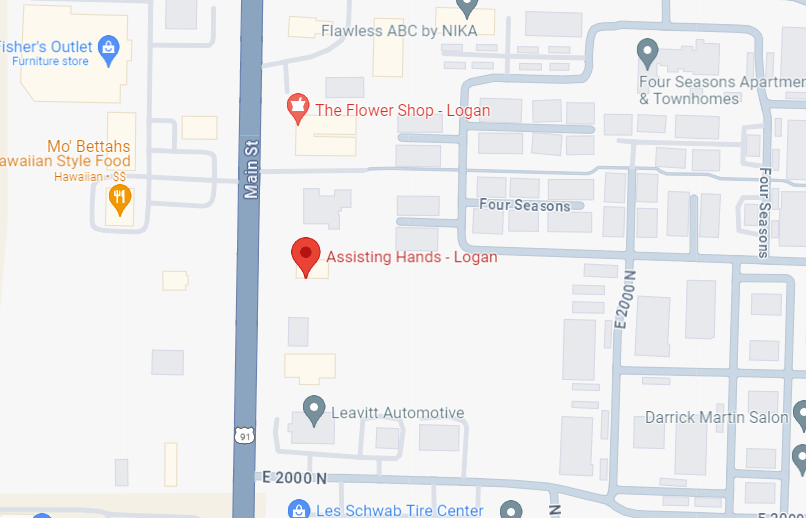
For families working with a caregiver in Logan, Utah, the free in-home assessment that Assisting Hands® Home Care provides is a practical first step — a Care Coordinator meets the person with Parkinson’s, listens to the family, and builds a care plan from that conversation, not from a default template.
Call (435) 216-3216, visit 434 North 20 West, Smithfield, UT 84335, or reach out online to schedule that conversation. There is no obligation attached to it.
Frequently Asked Questions
Q: At what stage of Parkinson’s does someone need a caregiver?
A: There is no universal answer, but most families find that professional caregiver support becomes necessary by mid-stage Parkinson’s — when physical care requires trained assistance, medications need precise management, or the family caregiver is approaching burnout. The earlier the support is introduced, the smoother the transition tends to be for everyone involved.
Q: Can someone with Parkinson’s stay at home long-term with a caregiver?
A: Yes. Most people with Parkinson’s can remain at home for many years with appropriate professional support. Familiar surroundings reduce disorientation and support the structured routines that Parkinson’s care depends on. In-home care is often clinically preferable to facility placement in all but the most advanced cases.
Q: What should a caregiver know about Parkinson’s disease?
A: Parkinson’s-specific training should include: medication timing and the consequences of missed doses, safe transfer and mobility assistance techniques, swallowing and nutrition monitoring, recognition and management of non-motor symptoms, including cognitive changes and hallucinations, and fall prevention specific to Parkinson’s gait patterns. A caregiver without this training, however well-intentioned, is not adequately prepared for mid-to-late stage Parkinson’s care.
Q: How do I convince my parents to accept a caregiver?
A: Start with the specific tasks that are most clearly needed rather than framing it as general care. Position the caregiver as someone who helps with particular things — medications, meals, transportation — rather than as supervision. Allow the relationship to develop gradually. Resistance almost always softens once a consistent, familiar caregiver is part of the daily routine.
Q: Does Medicare cover Parkinson’s home care?
A: Medicare covers skilled home health care — nursing visits, physical therapy, occupational therapy — when ordered by a physician and meeting specific clinical criteria. It does not cover non-medical home care: the daily personal care, companionship, and household assistance that most Parkinson’s patients need. Families typically fund non-medical home care through private pay, long-term care insurance, or, for eligible Veterans, VA benefits, including the Aid and Attendance program.