
Most falls at home happen during ordinary movements: standing up, turning in the bathroom, or walking to the kitchen at night. Reducing that risk takes two things: fixing the hazards in the home and steady support during the moments when balance is tested. An in-home caregiver in Ogden, Utah can help with both, by noticing hazards families stop seeing and by being present for daily routines. Assisting Hands® Home Care provides this support in Ogden and nearby communities from its Logan office.
The numbers explain why the details below matter. More than 14 million older adults, about 1 in 4, report falling every year. The age-adjusted fall death rate also rose 21 percent between 2018 and 2024 (CDC, Older Adult Falls Data, 2026). Falls are also the leading cause of injury for adults 65 and older.
Where Falls Happen: Room-by-Room Hazards and Fixes
Walk the home the way the person actually moves through it. The table below pairs common hazards with low-cost fixes.
| Area | Common hazard | Practical fix |
| Entryway | Snow, slush, and wet boots on hard flooring | Absorbent mat inside the door, boot tray, a sturdy chair for removing shoes while seated |
| Living room | Loose rugs, low tables, cords across walkways | Remove throw rugs or tape every edge, clear a straight path to each seat |
| Kitchen | Daily items on high shelves, spills, open cabinet doors | Move everyday dishes to waist height, wipe spills at once, keep a step stool with a handrail |
| Bedroom | Dark route to the bathroom, bedding trailing on the floor | Motion-sensor night lights along the route, bed at knee height, phone and glasses within reach |
| Bathroom | Wet tile, stepping over the tub wall, a low toilet | Anchored grab bars at toilet and tub, non-slip mats, raised toilet seat |
| Stairs | Dim light, a single handrail, items left on steps | Switches at top and bottom, rails on both sides, contrasting tape on the edge of each step |
Grab bars must be anchored into studs or with rated wall anchors, since towel bars and suction cups will not hold body weight. In Ogden and across northern Utah, the entryway deserves extra attention from November through March, when tracked-in snow creates the slickest floor in the house.
The Everyday Movements That Test Balance
Hazards set the stage, but the movement itself often decides whether a fall happens. Plan around these moments:
- Standing up. Blood pressure can dip when rising, which causes brief dizziness. Sit on the edge of the seat, stand, and count to five before stepping.
- Turning. Bathroom and kitchen turns are where many people lose their footing. Take small steps around rather than pivoting on one foot.
- Night trips. Darkness, grogginess, and urgency combine. Light the full route, keep it clear, and leave sturdy footwear by the bed.
- Carrying on stairs. Keep one hand on a rail. Use a shoulder bag instead of carrying items in both hands.
- Footwear. Backless slippers and socks on hardwood are frequent culprits. Closed-heel shoes with rubber soles are safer indoors.
Medication is the hidden factor in many of these moments. The CDC lists medicines that increase fall risk among the factors clinicians should address. A yearly medication review with a doctor or pharmacist is a reasonable step.
How a Caregiver Supports Safer Daily Routines
A non-medical caregiver does not replace physical therapy or a doctor’s fall assessment. What a caregiver adds is presence during the moments above, plus a second set of eyes on the home. An in-home caregiver in Ogden, Utah supports safety in specific ways:
- Standing by during bathing, dressing, and toileting, the transfers where many falls occur.
- Keeping walkways, stairs, and the bathroom floor clear and dry.
- Staying awake and nearby for nighttime bathroom trips.
- Noticing changes a family may miss: new furniture-walking, hesitation on stairs, or a change in how someone rises from a chair.
That last point is often the most valuable. A caregiver who visits several times a week sees the slow shift from steady to unsteady and can report it early. No caregiver can prevent every fall. The goal is fewer risky moments faced alone.
When Families Should Consider Extra Help at Home
The clearest signal is a change, not a single event. Consider adding support when any of these apply:
- A fall in the past six months, with or without injury
- Holding walls or furniture while walking through the house
- Avoiding the shower or the stairs because they feel unsafe
- Dizziness or lightheadedness when standing
- A recent hospital stay, surgery, or new prescription
- Living alone with long gaps between family check-ins
- A family caregiver who cannot cover early mornings or nights
Support does not have to mean many hours. Many families begin with the two highest-risk windows: the morning routine and the evening wind-down, and add overnight presence later if needed.
When a Fall Needs Medical Attention
Call 911 right away if the person cannot get up, has severe pain in the hip, back, or head, or loses consciousness. Confusion after a fall, or a head strike while taking a blood thinner, also calls for 911. Sudden weakness on one side, slurred speech, or a drooping face are stroke warning signs and need the same response.
For any other fall, including one with no visible injury, contact the person’s doctor the same day. As a general recommendation, every fall should be reported, because the cause may be treatable: a medication side effect, a vision change, low blood pressure, or an infection. A sudden change in mobility without a fall, such as shuffling or trouble rising from a chair, deserves the same visit.
Care in Ogden and Nearby Communities From the Logan Office
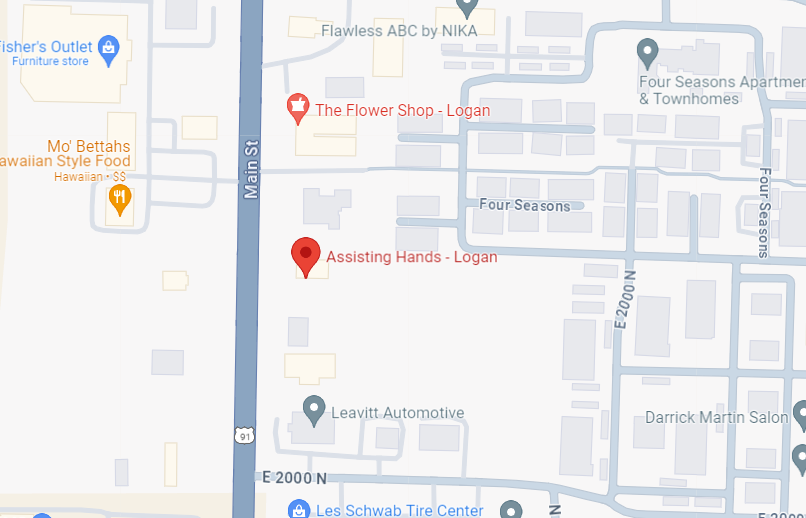
Assisting Hands® Home Care is based in Logan, Utah, and does not have a separate office in Ogden. Caregivers are scheduled from the Logan office to homes in Ogden and surrounding communities. Families searching for an in-home caregiver in Ogden, Utah work with the same care managers, assessment process, and caregiver matching as families in Cache Valley.
Services include personal care, light housekeeping, meal preparation, medication reminders, companionship, overnight care, and 24-hour care. Every engagement starts with a free in-home assessment, a practical first chance to walk the home for the hazards above.
Frequently Asked Questions
What Is the First Change to Make if We Can Only Do One Thing?
Start in the bathroom and on the night route to it, because those cover the most frequent high-risk moments. Install anchored grab bars at the toilet and tub, add a non-slip mat, and place motion-activated lights from the bedside to the bathroom door.
Can a Caregiver Help Someone Up After a Fall?
A caregiver checks for injury first and calls 911 if the person cannot get up, has pain, or hit their head. If the person is uninjured, the caregiver guides a slow, supported rise using a sturdy chair rather than pulling the person up by the arms.
Does Original Medicare Pay for Grab Bars or Bathroom Safety Items?
Generally no. Original Medicare does not classify grab bars, shower seats, or raised toilet seats as durable medical equipment. Walkers and some commodes can be covered with a prescription. Some Medicare Advantage plans and VA benefits include an allowance for home safety items.
How Many Hours of Care Actually Help With Fall Risk?
Families who arrange an in-home caregiver in Ogden, Utah through the Logan office usually see the greatest benefit from covering the morning and evening routines. That often means three to four hours a day. If nighttime bathroom trips are the main worry, overnight care covers that window directly.
Should Throw Rugs Be Removed Entirely or Just Secured?
Remove them anywhere the person turns or carries items: bathroom, kitchen, and hallways. In a living room, a rug can stay if it has a non-slip pad and flat edges. A low pile will not catch a shoe or walker tip.
If walking through your own home raised questions, the Logan team is glad to talk them through. Contact Assisting Hands® Home Care or call (435) 216-3216 to arrange a free in-home assessment in Ogden or a nearby community.