
Nobody thought to ask the question until the caregiver called from the kitchen floor.
Not “Is she okay,” though that came next. The first question the daughter asked, still in her coat, keys in hand, was: “Why didn’t you call me before you called 911?”
Neither of them had ever talked about it. There was no plan. Just two people who both cared about the same person, making opposite assumptions in the worst ten minutes of that particular Tuesday.
This plays out in some version across nearly every household that arranges in-home care without first answering the question that feels too early to ask: what should the caregiver do if something goes wrong?
Emergency preparedness is one of the most practically important things to establish before the first day of care, and it is rarely addressed in guidance aimed at families navigating in-home care for the first time. Families researching a Private In-Home Caregiver Ogden, UT option, one of the many surrounding communities our Logan office serves, will find plenty of advice on how to hire a caregiver but very little on what to agree on before that caregiver walks through the door.
Why the Conversation Gets Skipped
Families avoid this for understandable reasons.
Talking through emergency scenarios feels like inviting them. It can be emotionally heavy to sit with a new caregiver and walk through what to do if the person they are there to support stops breathing, falls and cannot get up, or becomes acutely confused and agitated. Families are already managing a great deal of emotion in the process of arranging care, and adding a worst-case planning session to the intake conversation often gets quietly deferred.
It also feels premature. The caregiver has not started yet. The parent seems stable. The first weeks will be light care anyway. There will be time to figure this out later.
Later is usually when the emergency happens.
Across the communities our Logan office serves in and around Ogden, families consistently report the same pattern. The families who navigate this best are rarely the ones who waited. Those who feel most prepared are almost always the ones who had the uncomfortable conversation early, documented what was decided, and handed the caregiver a clear written reference before day one. Because care is coordinated from our Logan office, the emergency planning conversation happens during the in-home assessment regardless of which surrounding community the family is in.
When to Call 911 Versus When to Call the Family First
This is the question every caregiver needs a clear answer to before they start, and it is not as simple as “call 911 for emergencies.”
Some situations are unambiguous. Cardiac arrest, loss of consciousness, a fall with head injury, sudden severe chest pain, difficulty breathing, signs of stroke. In all of these, the caregiver calls 911 immediately, without waiting for family authorization. This should be stated explicitly in writing, not assumed.
Other situations are less clear. A senior who becomes confused and agitated in the evening but has a known history of sundowning. A fall that produced no obvious injury but left the person shaken on the floor. A sudden refusal to eat or communicate that may indicate a medical change or may simply be a difficult day.
For these scenarios, families need to decide in advance: does the caregiver call 911 first, or call the family first and wait for guidance? The answer should reflect the senior’s specific medical history, the caregiver’s level of training, and the family’s realistic availability.
Neither answer is universally right. What is universally wrong is leaving the caregiver to figure it out alone in the moment. Families should also decide in advance what the caregiver should do if a family member cannot be reached promptly, particularly when the senior lives alone.
Who the Caregiver Contacts and in What Order
Every family should provide the caregiver with a written emergency contact list before care begins. This list should include family members in priority order, the senior’s primary care physician, any specialists involved in ongoing care, and the preferred hospital or urgent care facility. The list should also specify what the caregiver is authorized to share when speaking to medical personnel. If the senior has a healthcare proxy, power of attorney for healthcare, or advance directive, the caregiver should have a copy or know exactly where to find it. This is not the time for a caregiver to search through filing cabinets.
What the Caregiver Is and Is Not Authorized to Do
Non-medical caregivers have a defined scope of practice. In most states, they cannot administer medications, perform clinical procedures, or make medical decisions on behalf of the person in their care. Families should verify the specific rules in their state, as scope of practice for non-medical caregivers varies. For those considering a Private In-Home Caregiver Ogden, UT arrangement, a service area our Logan office covers directly, this scope of practice conversation falls entirely to the family rather than an agency intake coordinator.
This includes medications. If the senior has a prescribed medication that may be needed urgently, such as nitroglycerin for chest pain or a rescue inhaler for respiratory distress, the family should clarify in writing whether the caregiver’s role is to administer it, to locate it and hand it to the senior, or simply to call for help. These are different actions with different liability implications, and ambiguity in the moment causes dangerous hesitation.
It also includes physical intervention. Helping a person who has fallen requires technique. Attempting to lift someone from the floor incorrectly can cause injury to both the caregiver and the senior. Families should discuss with the caregiver in advance what the protocol is for a non-emergency fall, including whether to call for assistance before attempting to help the person up.
Medical Information the Caregiver Needs Before Day One
Every caregiver should arrive on the first day with a written summary of the senior’s relevant medical history. This does not need to be a full medical record. It should include current diagnoses that could affect emergency response, current medications with dosages and timing, known allergies, the name of the primary physician, advance directive status, and the location of relevant documents in the home.
This summary should be kept somewhere the caregiver can find it quickly and that emergency responders can also access if needed. A designated folder near the front door is a practical choice many families use. The goal is not to hand someone a medical file. It is to eliminate the ten-second search that should never happen in an emergency.
Putting It on Paper
An emergency plan is only useful if the caregiver can find it, read it quickly, and act on it without confusion. A single page with clear sections is enough. That page should cover five things: the agreed call protocol, the emergency contact list in priority order, the location of advance directives, the specific scope of what the caregiver is authorized to do, and the address and name of the preferred hospital or urgent care facility. It should be reviewed with the caregiver before the first day and updated whenever the senior’s medical situation changes.
Sitting down to complete this document often surfaces gaps families did not know existed. If two family members disagree on the call protocol, or if no one is certain of the senior’s advance directive status, those are problems far better discovered before a caregiver starts than during an actual emergency.
Licensed home care agencies incorporate emergency planning into the intake process as a standard step. The care coordinator reviews emergency contact information, confirms advance directive status, documents the call protocol, and briefs the assigned caregiver before the first visit.
The family does not have to build this system from scratch. It is part of what a licensed, credentialed agency provides as a matter of course.
For families in and around Ogden weighing whether to hire a Private In-Home Caregiver in Ogden, UT, this is worth understanding before making a decision. With a private arrangement, the full responsibility for building, communicating, and updating the emergency plan falls to the family. With a licensed agency, that infrastructure comes built in.
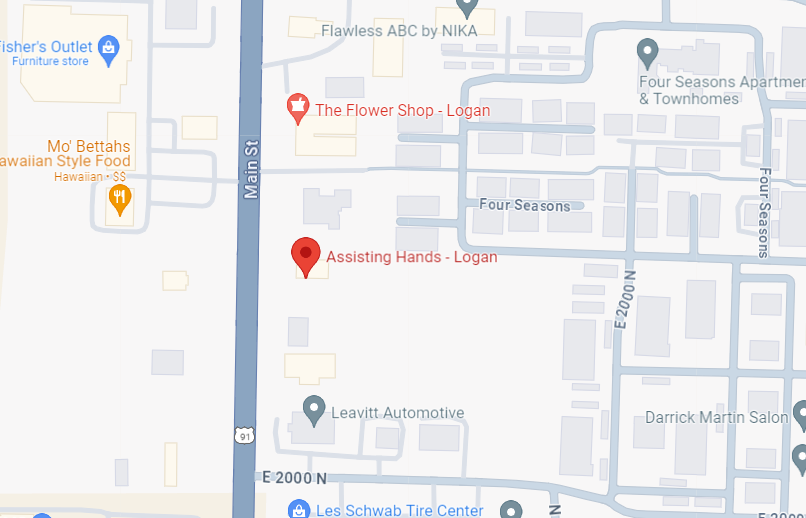
Assisting Hands Home Care is based in Logan, serving the Ogden area and surrounding Northern Utah communities from our Logan office. Pre-care assessments include emergency planning, documentation review, and caregiver briefing as standard steps, regardless of which community a family is in.
Call (435) 216-3216, visit 434 North 20 West, Smithfield, UT 84335, or reach out online to schedule a free in-home assessment.
Frequently Asked Questions
Q: What should a caregiver do first in a medical emergency?
A: In any life-threatening situation, the caregiver calls 911 immediately, without waiting for family authorization. For situations that are urgent but not immediately life-threatening, the protocol should be established in writing before care begins, specifying whether the caregiver contacts emergency services or a family member first.
Q: Should a caregiver have access to a senior’s medical information?
A: A caregiver does not need full medical records but should have a written one-page summary covering current diagnoses relevant to emergency response, current medications and dosages, known allergies, the primary physician’s contact, and the location of any advance directives. This should be accessible quickly in the home.
Q: Can a non-medical caregiver give medication in an emergency?
A: In most states, non-medical caregivers are not authorized to administer medications. Families should clarify the caregiver’s scope of practice before care begins and document in writing what the caregiver is expected to do if a medication is urgently needed.
Q: What goes on an emergency contact list for a caregiver?
A: The list should include family members in priority order with phone numbers, the senior’s primary care physician, relevant specialists, and the preferred hospital or urgent care facility. It should also note whether the caregiver is authorized to share medical information with providers and where relevant documents are kept.
Q: How does a licensed agency handle emergency planning differently than a private arrangement?
A: A licensed agency creates and documents the emergency plan before care begins and briefs the caregiver. With a private arrangement, the family handles this responsibility. For families in and around Ogden served by our Logan office, this is an important consideration when choosing a Private In-Home Caregiver Ogden, UT arrangement.