
Most people don’t think about in-home care until they need it. And by the time they need it, they usually need it a few months ago.
That’s not a criticism. It’s just how this tends to go. The signs show up gradually — a missed medication here, a skipped meal there, a home that’s gotten a little harder to keep up with — and families absorb each one quietly, assuming the next month will be more manageable. Until it isn’t.
This guide is for families who are somewhere in that in-between space: not in a crisis, but starting to wonder whether the current arrangement is actually sustainable. If you’re looking for home care in North Ogden, Utah, or a neighboring Weber County community, the information below applies directly to your situation.
What Non-Medical Home Care Actually Means
There’s a lot of confusion about what in-home care involves — particularly the non-medical kind. People sometimes picture clinical settings, hospital-grade equipment, or a level of intervention that signals something is seriously wrong.
Non-medical home care is far more common than that.
It covers the practical support that makes it possible for someone to stay in their own home safely: help with bathing and dressing, meal preparation, medication reminders, light housekeeping, transportation to appointments, and companionship. These are the activities of daily living — the things most of us do automatically — that become genuinely difficult when mobility decreases, energy drops, or a health condition starts affecting daily function.
The distinction between non-medical and medical home care matters for a few reasons. Non-medical care doesn’t require a physician’s order. It tends to be more flexible. And for the majority of seniors who need support at home, it’s exactly the right level of intervention — not more, not less.
Who Needs It and When
There’s no universal checklist for when in-home care becomes appropriate. But some patterns tend to show up consistently across families who eventually make this decision.
- Changes in personal hygiene: When bathing, grooming, or dressing becomes inconsistent, it’s often one of the first signs that daily routines are becoming harder to manage independently. It’s also one of the areas where people are most reluctant to ask for help.
- Nutrition and meal habits are shifting: Skipped meals, significant weight loss, or a refrigerator full of expired food can indicate that cooking has become too physically or cognitively demanding. This matters more than it might seem — poor nutrition accelerates a wide range of health problems in older adults.
- Medication management difficulties: Missed doses, doubled doses, or confusion about a medication schedule are genuine safety concerns. It’s also one of the leading causes of preventable hospitalizations among seniors.
- Increasing isolation: When someone stops engaging in activities they previously enjoyed, withdraws from social contact, or spends long stretches of time alone without meaningful interaction, the health effects — physical and cognitive — are well-documented and serious.
- A recent fall or close call: Falls are the leading cause of injury-related death among adults over 65. A single fall, or a near-miss, is often the moment families realize the home environment needs either modification, oversight, or both.
- Family caregiver capacity is reaching its limit: Sometimes the person who needs support most urgently isn’t the aging parent — it’s the adult child who has quietly taken on full caregiving responsibilities while managing work, their own family, and everything else. In-home care doesn’t replace the family. It makes it sustainable.
The Services Themselves — What They Cover and Why They Matter
- Personal Care: Bathing, dressing, grooming, toileting, and safe movement through the home. These are intimate, sensitive activities, and they require a caregiver who approaches them with patience and genuine respect. Done well, personal care doesn’t diminish independence — it protects it.
- Companion Care: The research on senior loneliness is unambiguous: social isolation carries measurable health consequences, including increased risk of dementia, cardiovascular disease, and depression. Companion care addresses this directly — a consistent caregiver who shows up, engages, and provides the kind of regular human contact that too many seniors go without.
- Meal Preparation: Home-cooked food, prepared to dietary requirements and personal preferences. For seniors managing chronic conditions like diabetes or heart disease, consistent nutrition isn’t a comfort — it’s a health intervention.
- Medication Reminders: Not administration — reminders. A caregiver who ensures the right medications are taken at the right time, reducing the risk of errors that lead to preventable ER visits.
- Light Housekeeping: Laundry, dishes, vacuuming, and general tidying. A clean and organized living space isn’t just more comfortable — it’s meaningfully safer. Clutter and household disorder are consistent contributing factors to falls.
- Respite Care: Specifically designed for family caregivers. Respite care is professional in-home coverage scheduled around the family caregiver’s needs — a few hours, a day, a weekend — so that the person carrying most of the responsibility can step back without their loved one going without support. Caregiver burnout is real, physically harmful, and almost always invisible until it isn’t. Respite care is one of the most important and least discussed services in this category.
- Overnight and 24-Hour Care: For seniors who need continuous coverage — due to cognitive changes, mobility limitations, or post-surgical recovery — overnight and full 24-hour care provides a rotating caregiver presence around the clock. This is often what makes the difference between a family being able to maintain a home care arrangement and having to consider a facility.
- Post-Surgery and Transitional Recovery Care: The period following a hospital discharge is clinically significant and frequently underserved. Seniors are often discharged before they’re fully independent, and the gap between discharge and recovery is when complications most commonly occur. Transitional care covers safe mobility, medication management, follow-up appointment transportation, and daily living support during this window.
- Memory Care Support: For families navigating Alzheimer’s disease or other forms of dementia, in-home care offers something a facility cannot easily replicate: a familiar environment. Consistency of space, routine, and caregiver relationship has a genuine, documented effect on quality of life for people with memory loss. Caregivers trained in evidence-based memory care techniques — structured routines, patient communication, behavioral awareness — can make the home environment work for far longer than families often expect.
- Parkinson’s Care: Parkinson’s disease is progressive, variable, and demands care that adapts rather than stays static. Effective Parkinson’s home care focuses on mobility support, fall prevention, adaptive meal preparation, and the kind of steady, unhurried caregiver presence the condition specifically requires.
What Families Should Look for in a Home Care Provider
Not all home care agencies operate the same way, and the differences matter.
A reputable, licensed agency employs caregivers who are background-checked, bonded, insured, CPR-certified, and screened before entering a client’s home. More importantly, a good agency provides backup — if a caregiver is sick or unavailable, the agency arranges coverage. This is the core operational difference between a licensed agency and a privately hired caregiver, and it matters most in urgent moments.
The relationship between a caregiver and a client is built over time and depends on fit — in personality as much as in skill. A good agency takes matching seriously because the most technically qualified caregiver won’t be effective if there’s no rapport.
Care plans should be built around the individual, not drawn from a default template. And they should evolve — what someone needs in the first month rarely looks the same six months later.
For Veterans and Surviving Spouses
One aspect of home care financing that consistently surprises families: the VA’s Aid and Attendance benefit can be used to help cover non-medical in-home care costs. This is a pension supplement available to eligible Veterans and qualifying surviving spouses who need assistance with daily living activities.
It isn’t automatic — it requires an application — and many families who would qualify have never pursued it. A VA-approved home care provider can help families understand eligibility and connect with the right VA resources to get the process started.
What to Expect From the First Conversation
Reaching out to a home care agency for the first time doesn’t require a decision. A reputable provider will offer an in-home assessment — a Care Coordinator visits the home, meets the person who needs support, listens to the family, and builds a care plan from that conversation. No commitment attached.
That initial visit is where care actually starts to take shape. It’s also where families most commonly say they wish they’d called sooner.
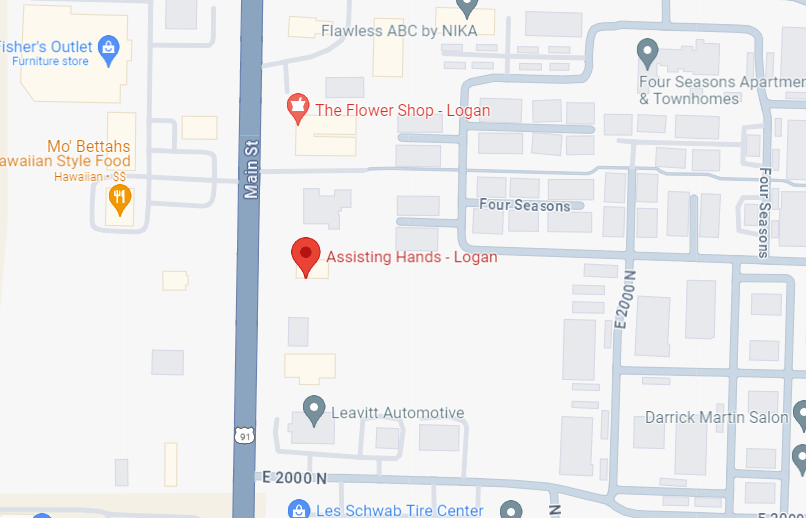
For families exploring home care in North Ogden, Utah, and the surrounding Weber County area, Assisting Hands is available to answer questions, walk you through the process, and schedule a free in-home assessment at a time that works for your family. Visit us at 434 North 20 West, Smithfield, UT 84335, call (801) 499-9993, or reach out online. If the situation is urgent, say so — we can move within 48 hours.
Frequently Asked Questions
Q: Is in-home care only for seniors?
A: No. Non-medical in-home care supports adults of any age who need assistance with daily living activities — including people managing disabilities, recovering from surgery, or living with chronic conditions that affect daily function.
Q: How is in-home care different from assisted living?
A: In-home care supports someone in their own home, on their own schedule, with services tailored to their specific needs. Assisted living involves moving to a shared facility with standardized programming and care ratios. Most people strongly prefer to remain at home when it’s a viable option — in-home care is what makes that viable for longer.
Q: What if my parent refuses help?
A: This is one of the most common concerns families raise. Resistance is normal and almost always comes from fear — of losing independence, of admitting something has changed, of a stranger in the home. Starting with companion care or light assistance, framed as help around the house rather than “a caregiver,” tends to reduce resistance over time. Most people warm up once the relationship is established.
Q: How quickly can care begin?
A: A well-resourced agency can typically match and place a caregiver within 48 hours of an initial assessment. For families arranging home care in North Ogden, Utah, and the surrounding area, Assisting Hands can often move faster for urgent situations — a hospital discharge, a sudden change in a family caregiver’s ability to continue. It’s worth asking directly about the timeline when you first call.
Q: How is cost determined?
A: Cost is primarily a function of hours and the type of care. Non-medical in-home care is charged hourly, and families pay only for the hours and service level their loved one needs. Veterans may be able to offset costs through the Aid and Attendance benefit. A free in-home assessment is the best way to get an accurate cost picture for a specific situation.
Q: What if the assigned caregiver isn’t a good fit?
A: A good agency will reassign without making it complicated. Fit matters — for safety, for comfort, and for the relationship that makes care actually effective. If it isn’t working, it’s reasonable to say so and expect the agency to respond.